
HCD in the Wild
Co-designed and delivered a two-day intensive short course that cut through industry hype and gave students a genuine end-to-end human centred design experience built around a real-world brief.
Overview
The UX and service design industry had a proliferation problem: too many short courses and accreditations adding complexity and confusion rather than clarity. Josh Smith, Fabian Renkan and I saw it constantly: people leaving courses with frameworks in their heads but no felt sense of what a real design process actually involved.
We decided to build something better.
The Challenge
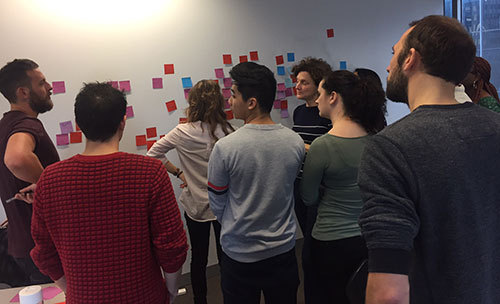
Most short courses teach methods in isolation: here’s how to do a persona, here’s how to conduct an ideation session. The result is practitioners who have surface level knowledge and a dogmatic approach. Our challenge was to design a learning experience that would give students a genuine, end-to-end understanding of what human centred design actually means: not as a set of prescribed tools, but as a way of thinking and working.
We also wanted it to be accessible to beginners without being beneath the level of participants who already had some experience.
My Role
I co-designed the course curriculum and facilitated delivery alongside Josh Smith and Fabian Renkan. Each of us brought experience from different contexts, including formal teaching, client delivery, and workshop facilitation, and I was responsible for ensuring the design activities were sequenced in a way that built genuine insight rather than just checking boxes.
What We Built
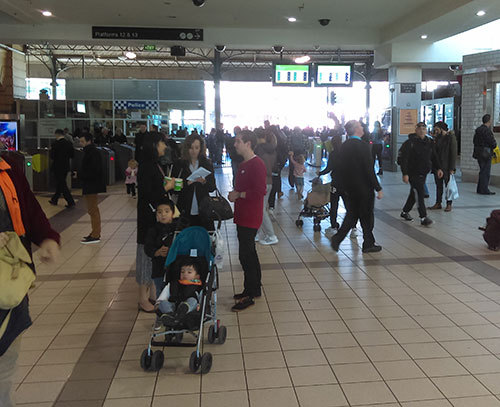
A real brief, not a hypothetical. The course was anchored by an actual client problem, briefed by Alexandra from Public Transport Victoria on a Saturday morning. That decision changed everything: students engaged with the work differently because the stakes felt real.
A structured but open process. Rather than running through prescribed activities, we built space for real insights to shape the direction students took. The process moved through the full arc of a design engagement, covering research, synthesis, ideation, prototyping, and presentation, but the content was driven by what participants were actually discovering.
A week between sessions. The two days were deliberately separated by a week. Students used that time to reflect, experiment, and let their thinking develop. This was a key point of difference from conventional intensive formats and consistently noted in feedback as valuable.
What Students Demonstrated
By the end of the course, participants had developed working knowledge of:
- Client briefing and project kickoff techniques
- Research preparation and planning
- Conducting user research interviews
- Insight gathering and synthesis
- Generative design thinking and assumption challenging
- Focus questions and ideation techniques
- Rapid prototyping and testing
- Feature prioritisation and planning -Pitching and presentation
“I liked that the class involved real practical research. I wish it could be extended to 3 days.”
– Course participant
Result
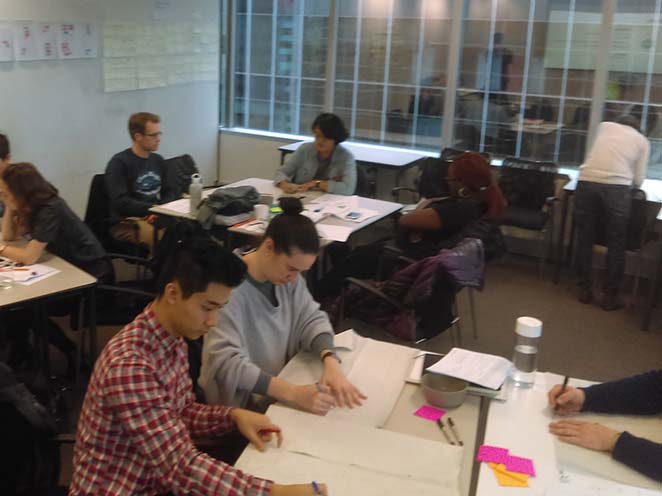
The feedback was strong and consistent: students valued the real-world problem, the practical pace, and the space to think between sessions. We successfully distilled a rigorous end-to-end design process into a two-day intensive that left participants with more than a certificate. They left with a genuine shift in how they understood the work.
That’s the bar I hold for any learning experience I design. If someone can leave and actually do things differently, it worked.