
Roadshow Contextual Research
Led 12 in-home contextual research interviews, generating deep insight into how audiences actually research and consume media, at a moment when Roadshow's distribution model urgently needed to evolve.
Overview
The media industry was in the middle of a fundamental shift. Audiences had more ways to access content than ever before, and a growing willingness to use illegal channels when the legitimate ones failed them. Roadshow needed to understand how their customers were actually behaving, not how the business assumed they were.
I led a contextual research program of 12 in-home interviews, each 90 minutes long, to generate the kind of deep customer insight that surveys and analytics simply can’t produce. The findings gave Roadshow a clear picture of what their audiences expected and where their current model was letting them down.
The Challenge
Roadshow was clinging to distribution models that were increasingly out of step with how people consumed media. The risk of continuing without a genuine understanding of customer behaviour was significant, not just commercially but strategically. Falling behind audience expectations in a disrupted market is hard to recover from.
”Service blockers, poor user experience and release delays on paid services push users into illegal channels to acquire and view media.”
– Research finding
The goal was to get Roadshow close enough to their actual customers to understand the gap between what the business was offering and what people genuinely needed.
My Role
I was responsible for leading all planning and research activities, from designing the research approach and participant recruitment through to conducting the interviews, synthesising findings, and presenting to the client. I conducted the interviews directly, with support from other researchers.
What I Did
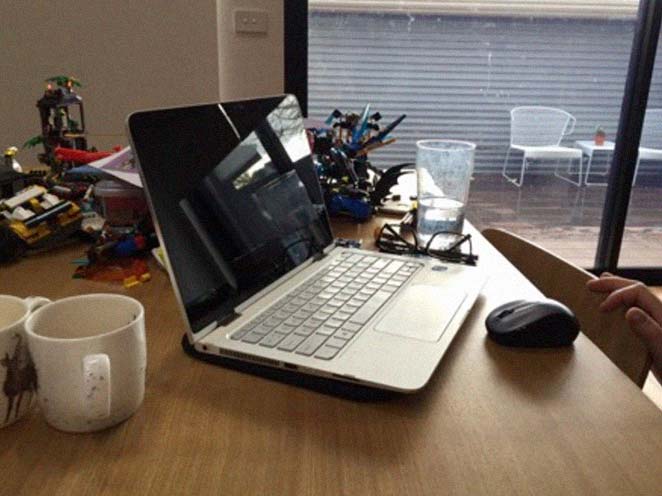
Designed a contextual approach. Interviewing people in their own homes, rather than in a research facility, was a deliberate choice. Watching people interact with media in their natural environment surfaced behaviours and habits that wouldn’t have emerged in a formal setting.
Used pre-work to deepen the sessions. Each participant was asked to create a collage before their interview, exploring how they engaged with different types of media. This preparation gave people time to reflect in advance, which made the conversations richer and more specific from the moment we walked in.
Covered the full media lifecycle. Sessions explored how participants discovered, researched, accessed and consumed content across cinema, video, TV and moving image, including how they used different channels, what drove their choices, and how they responded to the Roadshow brand and prototype website.
Recruited against Roadshow’s customer segments. Participant selection was carefully matched to Roadshow’s defined customer characteristics to ensure the insights were relevant to their actual audience.
What the Research Found
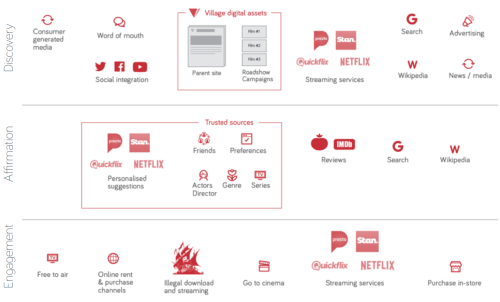
Findings were structured and presented across three phases: engagement, affirmation, and discovery. Each theme was supported by customer verbatim quotes and accompanied by focus questions to guide how Roadshow might act on the insight.
The research was direct: audiences had already moved on. The expectation of flexible, friction-free access to content was not a future state. It was the present reality. Where legitimate channels failed to meet that expectation, people found other ways.
Result
This research gave Roadshow grounded, specific evidence about what their audiences expected and where the current experience was falling short. Presented with customer voices attached, it was the kind of insight that’s difficult to dismiss.
In-home contextual research is one of the most powerful methods available for understanding real behaviour. The environment itself tells you things the participant never would, and it was the right call for a project where the gap between assumed behaviour and actual behaviour was at the heart of the strategic challenge.