
SmartyGrants Responsive Rebuild
Led product strategy and design for a responsive rebuild of SmartyGrants, uncovering multiple new product and service opportunities beyond the original operational brief, delivering a Figma component library, user flows, and Agile-ready estimates in three months.
Overview
SmartyGrants is a grants management platform used by 1,364,992 unique users, spanning Grant Makers, Expert Applicants, and Novice Applicants. The platform had accumulated significant design and technical debt over a decade, and the legacy architecture was causing real harm: people trying to apply for disaster relief during bushfires and floods found the site unusable on a phone.
The team came to me focused on operational fixes and bug resolution. I delivered that, and significantly more.
The Challenge
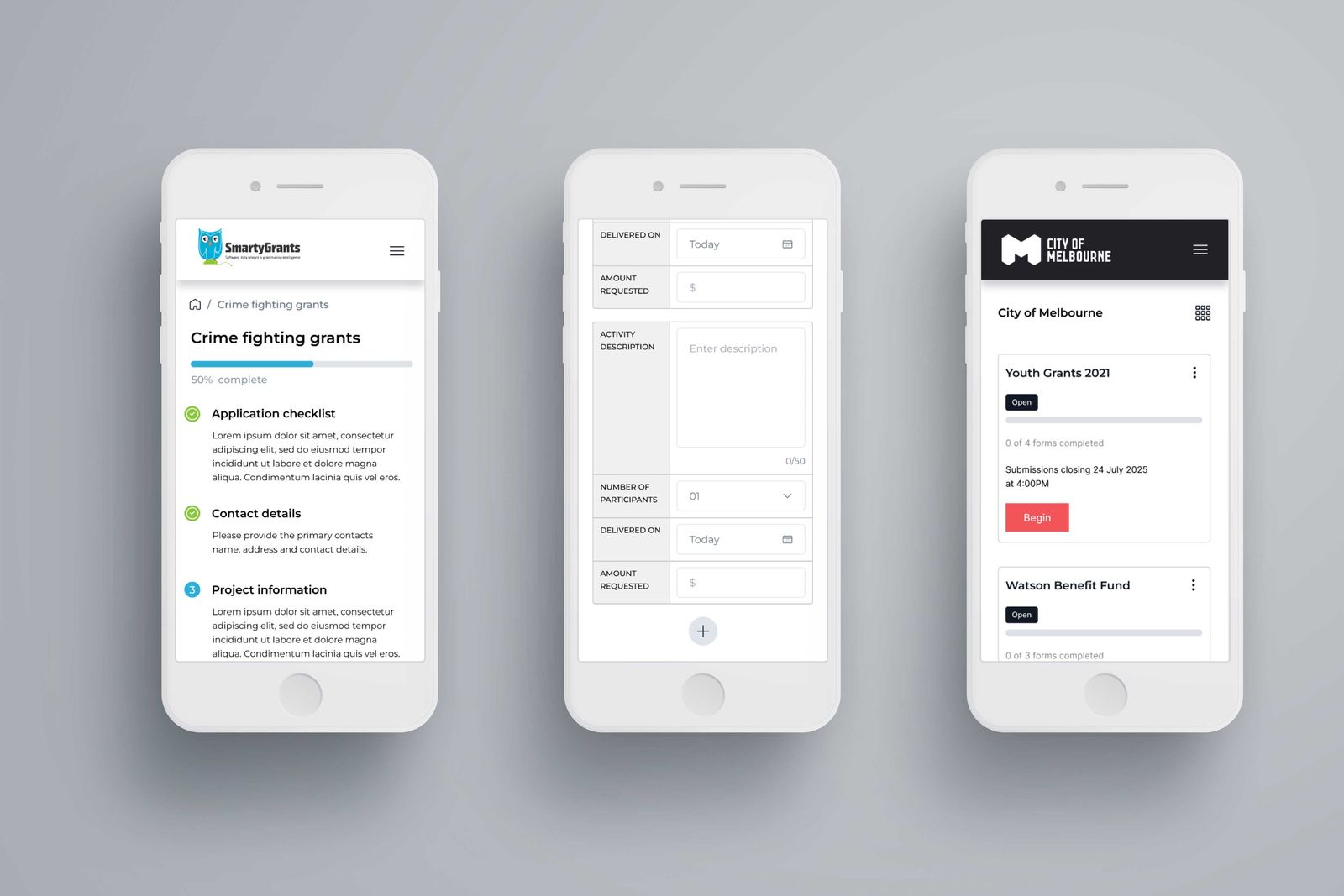
The most urgent problem was responsiveness. The platform’s legacy architecture didn’t support adaptive components, which meant applicants without desktop access, including disaster-affected people in the field, couldn’t use it at a critical moment.
But operational fixes were only part of the picture. The SmartyGrants team had been focused on what was broken. My role was to also surface what was possible.
My Role
I led Product Management strategy, design and discovery activities, and UX/UI component library creation. I was the connective tissue between the product strategy, the engineering team, and the SmartyGrants leadership group.
What I Did
Ran a structured discovery phase. I began with task mapping, persona development, heuristic analysis, and subject matter expert discussions to build a complete picture of the current product: its strengths, its debt, and its untapped potential. This culminated in a full product review document and presentation to the SmartyGrants leadership team.
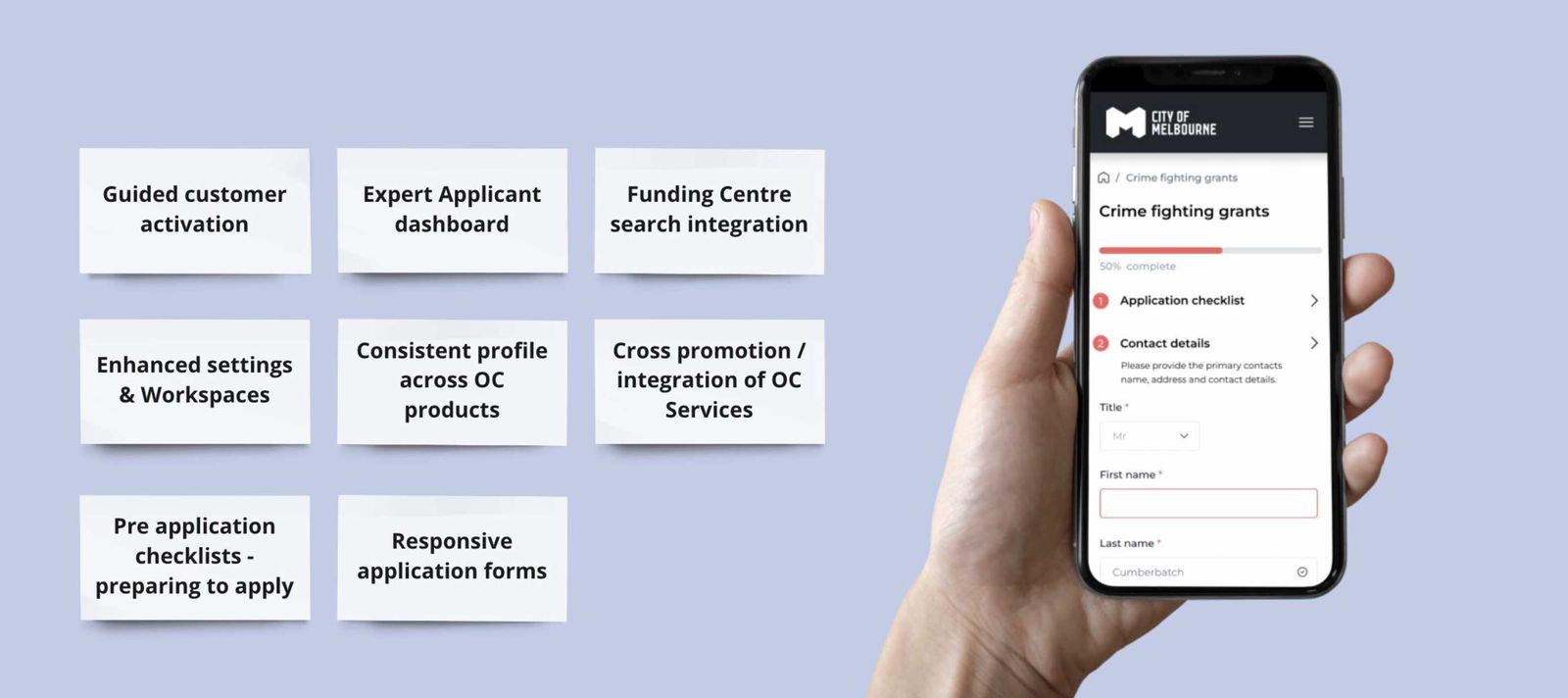
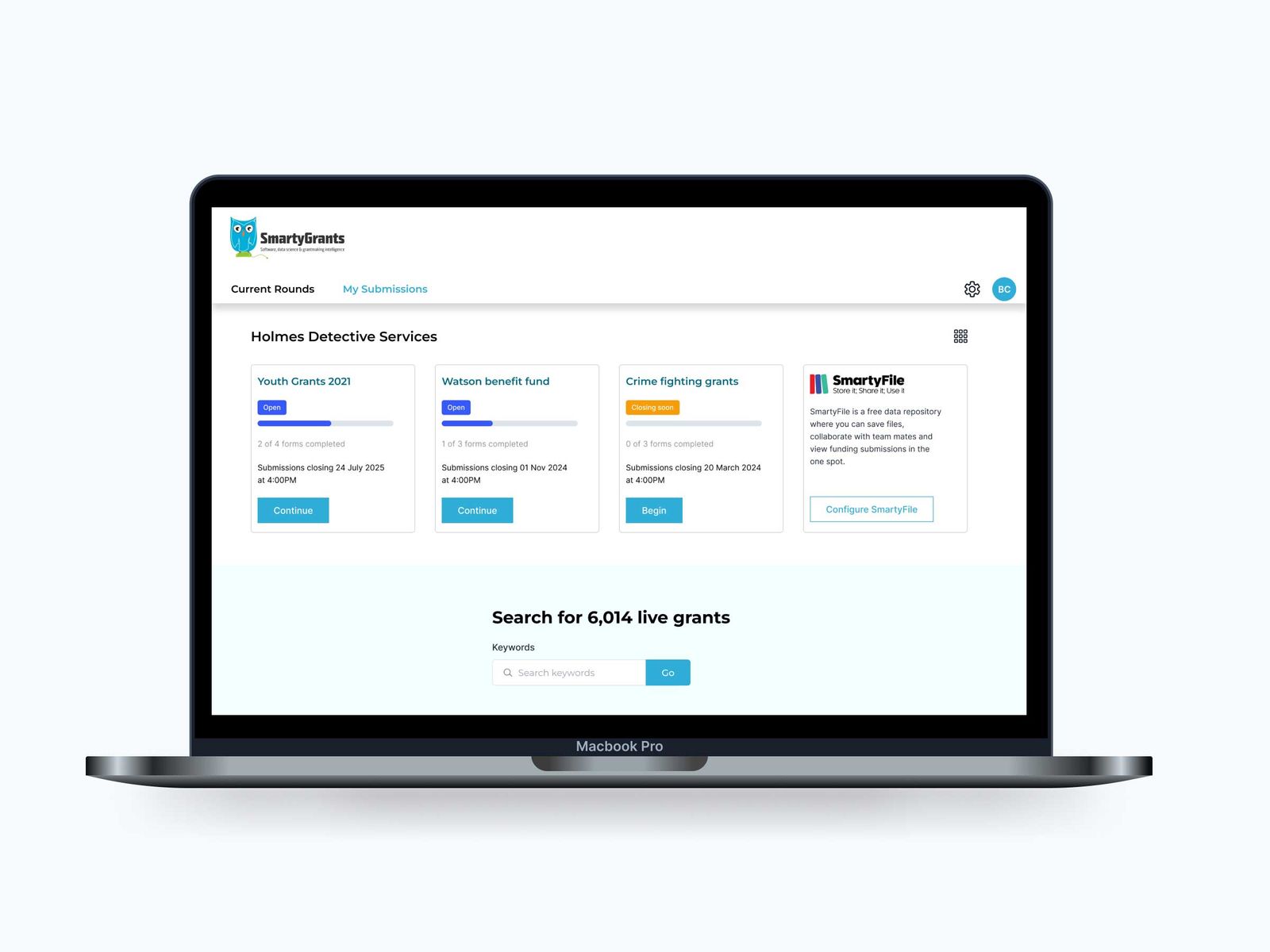
Identified opportunities beyond the brief. The discovery process surfaced multiple strategic opportunities that the team hadn’t been looking for: customer activation with connected services, SSO profile management, pre-application checklists, and an Expert Applicant dashboard. These weren’t edge cases. They were meaningful improvements to the core user journey.
Led Agile estimation with engineering. In parallel to the design work, I consulted with the engineering team on the component rebuild approach and led an intensive day-long Agile estimation session, ensuring the product and engineering teams were aligned on scope, sequence, and effort before any build began.
Delivered a production-ready component library. The Figma component library I built was based on Tailwind CSS and designed to be immediately usable by the engineering team, not a design artefact, but a build-ready resource.
Delivered in Three Months
- Usability report of the SmartyGrants applicant site
- End-to-end task model
- Responsive Figma component library based on Tailwind CSS
- Future state primary user flows
- Agile user stories with estimates
Key Opportunities Identified
- Customer activation with connected services
- SSO profile management
- Pre-application checklists
- Expert Applicant dashboard
- Component-based responsive redesign
- Branding strategy and consistency
Result
This engagement delivered everything the team originally scoped, and then reframed what was possible. When an organisation has been focused on maintaining what exists, a structured discovery process often reveals that the opportunity isn’t just to fix what’s broken, but to build something significantly better.
The SmartyGrants team were early in their product development journey. Part of my role was to model what good product thinking looked like in practice, and to leave them with the tools and language to continue it.